
What Is a Digital Product Passport for Textiles?

Turn a jacket inside out and read the care label. Fibre percentages. A wash symbol. A country of make. Four lines of tape sewn into a seam, and that is the sum of what the jacket can tell you about itself.
The EU has decided that is not enough.
Soon that same jacket will carry a second label you can scan. Behind it sits a record of what it is made of, where its materials came from, how to repair it, and how to recycle it when it wears out. That record is the digital product passport, and textiles are one of the first product groups that will need one.
Most of the surprise is in who owes it. A one-person label pays the same as a chain.
At a glance:
- A textile passport is a scannable, machine-readable record tied to the garment itself.
- It comes from the EU's Ecodesign for Sustainable Products Regulation, Regulation (EU) 2024/1781.
- It holds fibre composition, materials, care and repair, durability, recyclability and compliance data.
- The duty falls on the operator that places the product on the EU market, whatever its size.
- The exact field list waits on a delegated act the Commission has not yet adopted.
This post covers what the passport is and who owes one. For the field list, read what a textile passport must hold. For the dates, read the textile DPP timeline.
A digital product passport for textiles, defined
A digital product passport (DPP) for textiles is a structured, machine-readable record of a garment's key facts, tied to the physical item and reachable by scanning a code on it. Think of it as a product's identity file. Fibre composition, materials, care and repair information, durability, recycled content, and compliance data all sit in one place, and all of it is kept current.
It is a regulated data record, not a hangtag or a marketing page. It has to exist before the product is sold. And it has to stay reachable for years after, right up to the point where the garment reaches a recycler.
So the textile DPP is the garment's scannable dossier, carried on the product itself. It follows the garment from the shop floor to the recycling bank.
Which law creates the textile passport?
The ESPR is the Ecodesign for Sustainable Products Regulation, Regulation (EU) 2024/1781. It is the law that creates the textile passport, and it is covered in what the ESPR is. For the passport as a general instrument, see what a digital product passport is.
The ESPR is the successor to the old 2009 Ecodesign Directive. The directive mostly governed the energy efficiency of appliances. The regulation keeps that and goes much further. It extends ecodesign rules, and the digital product passport, to almost every physical product sold in the EU. It also names textiles among the first groups in line.
Two things follow from that.
First, the DPP is not a textiles-only idea. It is a framework that will reach batteries, electronics, furniture and more. Textiles are simply near the front of the queue.
Second, because it is a regulation rather than a directive, it applies directly across the EU with no national versions to wait for. For the packaging equivalent of this shift, see what the PPWR is.
What data will a textile passport carry?
The exact field list is set by a delegated act for textiles that the Commission has not yet adopted, so the precise data set is not final. The ESPR and the working plan already point at the categories, such as a unique product identity, fibre composition and materials, care and repair information, durability and recyclability, and compliance data. For example, the fibre percentages a recycler needs to sort a garment sit in the same record as the certificate behind a recycled-content claim.
The theme running through all of it is the same. Keep the garment in use, and make it recyclable when its life ends. The passport puts that information where a shopper, a repairer and a recycler can each reach it.
Field by field, with what populates each one, is a separate job: see what a textile passport must hold.
How does a shopper actually reach it?
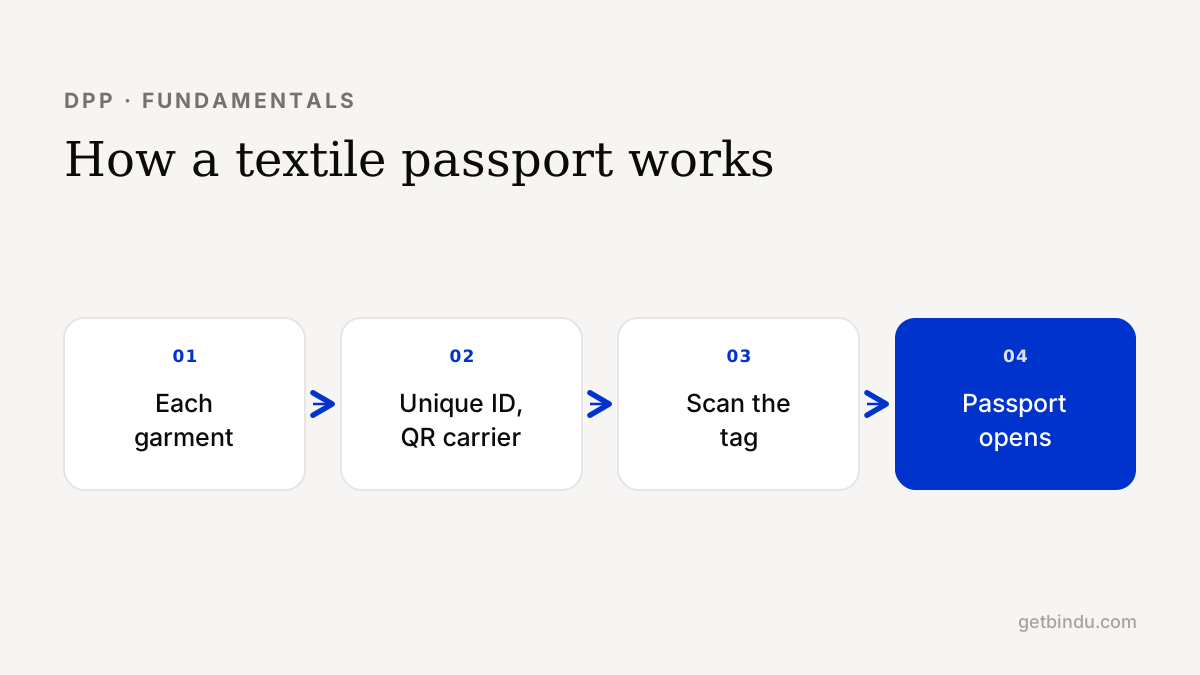
Each garment gets a unique identifier, carried on the product in a data carrier. A data carrier is the code on the garment that holds that identifier, often a QR code, though NFC or RFID tags are allowed too. The carrier has to survive washing and still resolve years after the sale.
One scan opens the passport, and what it shows depends on who is asking. A shopper sees a public view, while recyclers and market authorities reach wider views. How those tiers are drawn is covered in what a textile passport must hold.
The passport is not a blockchain. The regulation is technology-neutral about how the data is stored. It does not mandate a distributed ledger.
The content does not live on an EU server either. The DPP Registry is a central directory that records each product's unique identifier, not a store of the passport data itself. The actual passport data stays with the brand, or with a passport service provider acting for it. The scan resolves to the brand's data, not to Brussels.
Who has to create the passport?
The duty falls on the economic operator that places the product on the EU market. Usually that is the manufacturer or the importer.
The ESPR lets that operator appoint an independent passport service provider to build and maintain the passport on its behalf. The legal responsibility still stays with the operator. You can hand off the work. The accountability stays with you.
| Role | Who it is | What it owes |
|---|---|---|
| Manufacturer | The business that makes the garment and places it on the EU market | The passport, and the data behind it |
| Importer | The business bringing a non-EU garment onto the EU market | The passport, as the operator placing the product |
| Own-brand retailer | A retailer selling a garment under its own name | The passport, because it is the operator on the market |
| Passport service provider | A third party appointed to build and host the record | The work, never the legal responsibility |
One point catches smaller brands off guard. Scope is set by product category, not company size. A small label placing a finished garment on the EU market is in scope. It counts as much as a large retailer. There is no turnover floor that lets a small brand out.
Consider a two-person label that makes 300 jackets and sells them across the EU. It has no compliance team and no in-house data staff. Under the ESPR it still owes a passport for that jacket, exactly as a national chain owes one for its own line. Neither the small run nor the small headcount changes the duty. The label can hire a passport service provider to build and host the record. But if a market authority scans the garment and the data is missing, the label answers for it, not the provider.
The textile DPP is also not the same thing as textile Extended Producer Responsibility. Extended Producer Responsibility (EPR) is a separate duty that makes producers fund textile-waste collection, and it comes from the revised Waste Framework Directive. The passport comes from the ESPR and governs product-level data instead. A brand can owe both at once.
| Textile DPP | Textile EPR | |
|---|---|---|
| Source law | ESPR, Regulation (EU) 2024/1781 | Revised Waste Framework Directive |
| What it governs | Product-level data on the item | Funding of textile-waste collection |
| Who owes it | Operator placing the product on the EU market | Producers |
Where Bindu fits. A textile passport is fibre percentages, material origins, care instructions, recycled content and compliance evidence, for every style you sell. Bindu assembles that product data with the evidence behind each claim, so a style is passport-ready as a matter of record rather than a project. See the textile passport breakdown.
FAQ
What is a digital product passport for textiles? It is a regulated, machine-readable record of a garment's key data. That covers fibre composition, materials, care, durability and compliance. The record is tied to the physical item and reachable by scanning a code on it. It is required under the EU's Ecodesign for Sustainable Products Regulation (ESPR), and textiles are among the first product groups to need one.
Source: EUR-Lex: Ecodesign for Sustainable Products Regulation (EU) 2024/1781
Which law introduces the textile digital product passport? The Ecodesign for Sustainable Products Regulation (ESPR), Regulation (EU) 2024/1781. It replaced the 2009 Ecodesign Directive and extends the digital product passport to almost every physical product, with textiles among the first groups.
Source: EUR-Lex: Ecodesign for Sustainable Products Regulation (EU) 2024/1781
When will textiles need a digital product passport? Textiles sit in the first wave of the ESPR working plan, and the exact date becomes fixed once the delegated act for textiles is adopted. The dates already fixed, including the 19 July 2026 unsold-stock rule, are set out in the textile DPP timeline.
Source: EUR-Lex: Ecodesign for Sustainable Products Regulation (EU) 2024/1781
Who has to create a textile passport? The economic operator that places the product on the EU market, often the manufacturer or importer. It can appoint a passport service provider to do the work, but the legal responsibility stays with the operator. Scope is set by product category, not company size.
Source: EUR-Lex: Ecodesign for Sustainable Products Regulation (EU) 2024/1781
Is a digital product passport a blockchain? No. The ESPR is technology-neutral and does not require a blockchain. The EU's central DPP Registry only records each product's unique identifier; the passport data itself stays with the brand or its passport service provider.
Source: EUR-Lex: Ecodesign for Sustainable Products Regulation (EU) 2024/1781