
Textile DPP Data Requirements: What It Holds

Pick up a hoodie in a shop. What does the brand actually know about it?
Usually less than you would think. The fibre split, maybe, and a factory country. But the deeper facts are missing. Which farm or recycler the cotton came from. How long the garment is built to last. Whether the dye contains a substance of concern. How to recycle the mixed-fibre cuff. That data is scattered across the supply chain, or it was never captured at all.
A digital product passport is a structured data record, tied to one product and reachable from a code on the item, that holds the facts a shopper, repairer, recycler or authority needs. For textiles, it asks the brand to pull all of that into one place, per style, and stand behind it. So the passport is a data problem long before it is a design problem.
Much of this data has never sat in one place. Some of it reaches all the way down to the thread and the zip.
At a glance:
- The exact field list for a textile passport is set by an ESPR delegated act that has not been adopted yet.
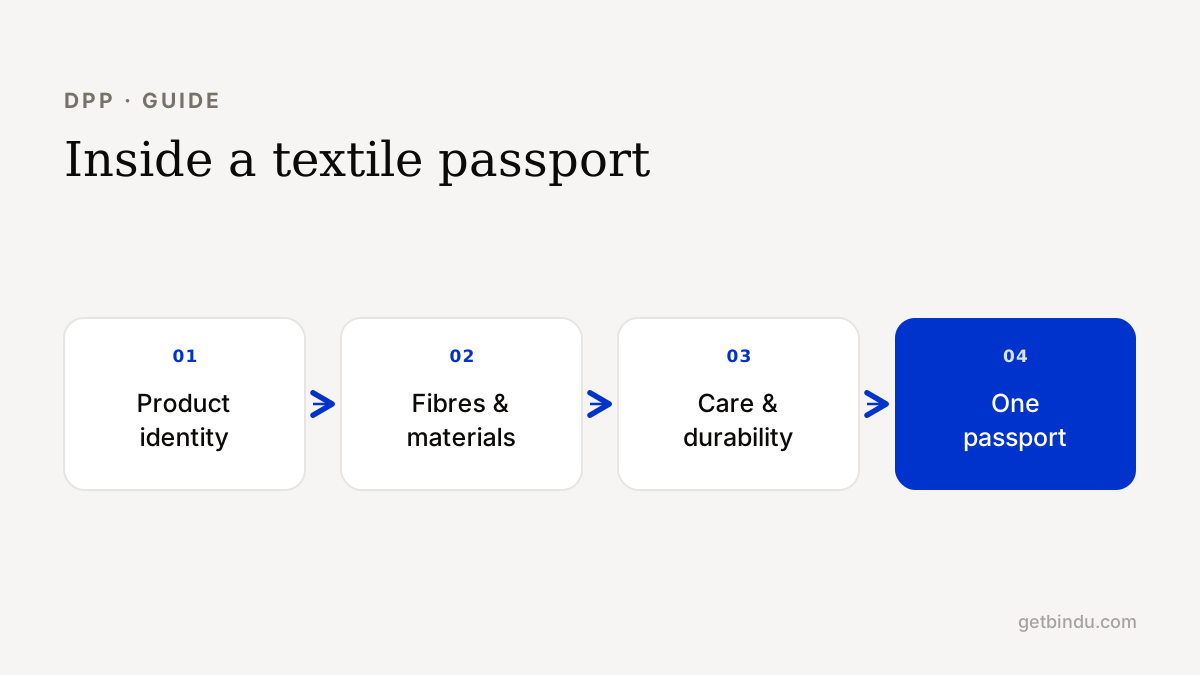
- The data falls into five buckets: product identity, fibre composition, care and repair, durability and recyclability, and compliance.
- Claims are judged on components, the shell, lining, thread and zip, not on the finished garment.
- One scan of the data carrier opens tiered views: a public one for shoppers, wider ones for recyclers and authorities.
- The economic operator, the manufacturer or importer, owes the data, whatever the company's size.
What the law has and has not fixed yet
The exact field list for a textile passport is set by a delegated act for textiles under the Ecodesign for Sustainable Products Regulation (ESPR, Regulation (EU) 2024/1781). That act has not been adopted yet.
So anyone selling you a definitive, final "textile DPP data template" today is guessing at the edges. What is not a guess is the direction of travel. The ESPR and its working plan already make clear the categories the passport will carry. Build around those and you will be close, whatever the final act pins down.
For the bigger picture, start with the digital product passport for textiles explainer. For the dates, see the textile DPP timeline.
The data a textile passport is expected to hold
The expected fields fall into five buckets, and each answers a question a different party will ask of the garment. Fibre composition causes the most work, because it reaches past the "80% cotton" on the care label down to the individual components.
| Data bucket | What it holds | Who reaches for it most |
|---|---|---|
| Product identity | A unique identifier for the item or model | Every party, as the shared anchor |
| Fibre composition and materials | What the garment is made of, down to components | Shoppers and recyclers |
| Care and repair | How to wash, maintain and repair the item | Shoppers |
| Durability and recyclability | How long it lasts and how to recycle it | Recyclers |
| Compliance data | Proof it meets the rules, including substance restrictions | Market authorities |
The thread through all five is the EU's real goal: keep the garment in use, then recycle it cleanly. The passport is just the container that puts each fact where the right person can reach it.
It is assessed on the components, not the finished garment
One detail makes textile data hard. A garment is not one material. It is a shell, a lining, a thread, a zip, a print, a coating. For which supplier document actually proves each of these fields, see textile DPP evidence documents.
Recyclability and material claims are judged on those parts, not on the finished item as a single thing. A jacket that looks recyclable can fail because of a bonded membrane or a mixed-fibre trim. So the passport data has to reach component level. That is exactly where most brands have the least visibility, because the data lives with mills and trim suppliers several tiers down.
For a worked example, take a cotton-blend hoodie. Product identity is one code for the style. Fibre composition is not "80% cotton" but the shell, the ribbed cuff, the drawcord and the print, each with its own mix. Care and repair covers the wash and how to fix a seam. Durability and recyclability turn on the mixed-fibre cuff, the part hardest to recycle. Compliance covers the dye and any restricted substance. Five buckets, one garment, and most of the detail sits below the brand's own walls.
This is the same logic as a PPWR declaration of conformity, where recyclability is assessed on the adhesives, inks and coatings rather than the finished box.
How the data is reached, and who sees what
Every garment carries a data carrier. A data carrier is the QR code, NFC or RFID tag on the item, built to survive washing and still resolve years after the sale. One scan opens the passport.
What opens is not the same for everyone. The ESPR provides for access tiers: a public view for shoppers, and wider views for recyclers and market authorities. A consumer sees care and composition. A recycler sees what it needs to sort and process the item. An authority sees the compliance evidence.
The content itself stays with the brand or its passport service provider. The EU's central DPP Registry only records each product's unique identifier. A scan resolves to the brand's data, not to an EU server.
Who assembles it
The economic operator is the party that places the product on the EU market, usually the manufacturer or importer, and it owes the passport and its data. The operator may appoint a passport service provider to build and maintain it. The accountability for keeping the data accurate does not move.
A passport service provider is the third party a brand may appoint to build and hold the passport, without taking on the legal duty for the data. Scope is set by product category, not company size. So a small brand carries the same data burden per style as a large one. The difference is that a large brand has a compliance team and a small one does not. That is why the data-gathering is the part worth starting early.
Where Bindu fits. The textile passport still waits on its delegated act, so Bindu does not publish a finished textile DPP today. What it does is the part that will not change: reading supplier documents into structured records, component by component, so the fibre and trim data exists before anyone fixes the format. See the textile passport breakdown.
FAQ
What data does a textile digital product passport need? The exact list is set by the forthcoming ESPR delegated act for textiles. It is expected to cover product identity, fibre composition and materials, care and repair information, durability and recyclability, and compliance data, all reachable from a code on the garment.
Source: EUR-Lex: Ecodesign for Sustainable Products Regulation (EU) 2024/1781
Is there a final textile DPP data template yet? No. The delegated act for textiles under the ESPR has not been adopted, so the precise fields are not final. The categories above are already signalled by the ESPR and its working plan, so brands can build around them now. The Commission says the same thing on its own textile passport page: the textile-specific fields arrive with the delegated act, built on the horizontal passport requirements being set now.
Source: EUR-Lex: Ecodesign for Sustainable Products Regulation (EU) 2024/1781
Source: European Commission: Digital product passport for textile apparel
Why does the passport data need to reach component level? Because recyclability and material claims are judged on a garment's parts, the shell, lining, thread, zip, print and coating, not on the finished item as one material. That component data usually sits with mills and trim suppliers, which is the hardest part to gather.
Source: EUR-Lex: Ecodesign for Sustainable Products Regulation (EU) 2024/1781
How do shoppers and recyclers see different data? Through access tiers. One scan of the garment's data carrier opens a public view for shoppers, while recyclers and market authorities reach wider views with the data each needs. The content stays with the brand, not on an EU server.
Source: EUR-Lex: Ecodesign for Sustainable Products Regulation (EU) 2024/1781
Who is responsible for the passport data? The economic operator placing the product on the EU market, usually the manufacturer or importer. It can appoint a passport service provider to build and maintain the passport, but the legal responsibility for the data stays with the operator, whatever the company's size.
Source: EUR-Lex: Ecodesign for Sustainable Products Regulation (EU) 2024/1781