
PPWR Labelling Requirements: Rules and Dates

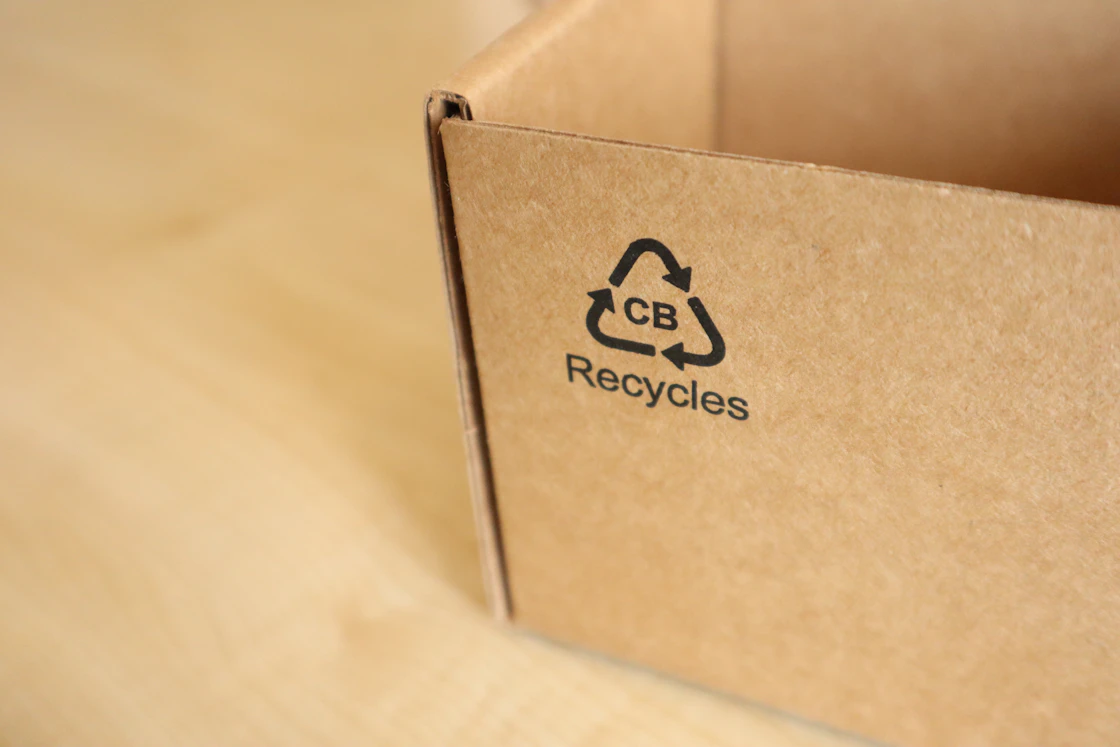
Labelling is the part of the PPWR that consumers will eventually see on every pack. It is also the part where companies know least about what the result will look like.
The reason is simple. Article 12 requires a harmonised label, but an implementing act from the Commission sets what it looks like. That act was due by 12 August 2026. As of the latest report we found, dated 27 October 2026, it had not been adopted.
At a glance:
- PPWR labelling is set out in Article 12 of Regulation (EU) 2025/40.
- The sorting label showing material composition applies from 12 August 2028, or 24 months after the implementing act enters into force, whichever is later.
- The act is overdue. A trade report of 27 October 2026 gives a new target of the second quarter of 2027. We found no Commission confirmation of that.
- The sorting label and the reuse label are mandatory. A recycled-content claim is voluntary, but follows the harmonised rules once you make one.
- The EU rules come on top of national law. In Germany, the new packaging act has applied since 12 August 2026, and its fines for Article 12 breaches start on 12 February 2027.
What Article 12 requires
PPWR labelling means marking packaging with a single EU label that helps consumers sort it. Article 12 bundles several marks under one roof. They do not all apply at the same time or to the same packaging.
| Mark | What it shows | Mandatory? | Where |
|---|---|---|---|
| Sorting label | Material composition, based on pictograms | Yes | Article 12(1) |
| Compostability | Material is compostable, not for home composting, not to be littered | Yes, for the packaging named | Article 12(1) |
| Substances of concern | Flag through open digital marking | Yes, where such substances are present | Article 12(1) |
| Reuse label | Packaging is reusable, plus a QR code with details | Yes, for reusable packaging | Article 12(2) |
| Recycled content, bio-based plastic | A percentage | No, but harmonised if you make the claim | Article 12(4) |
| Deposit and return | Clear marking, optional harmonised colour | Yes, for schemes under Article 50(1) | Article 12(1) |
| Extended producer responsibility (EPR) | Symbol that the producer meets its duties | No, and digital only | Article 12(9) |
The article text does not say the recycled-content mark is voluntary. That is the Commission's reading in its guidance C(2026) 3702, section 13. It says waste sorting labels and reuse labels are mandatory. If you want to show recycled content, you must use the EU specification.
The article also says how the label is applied. It must be visible, clearly legible and firmly attached, printed or engraved, so that it cannot easily be removed (Article 12(5)). Where that is not possible because of the nature or size of the pack, it goes on the grouped packaging. If that is not possible either, a single electronically readable code replaces it. The information must be in a language set by the Member State where the packaging is made available.
Two rules get overlooked. For online sales, the information must be available before purchase. And operators must not apply marks that could mislead or confuse consumers about sustainability, packaging features or disposal, where the PPWR sets a harmonised label for the same thing (Article 12(8)).
When PPWR labelling applies
Article 12 does not give a fixed deadline. It sets a race between two dates, and the later one wins.
The sorting label is mandatory from 12 August 2028, or 24 months after the implementing acts under paragraphs 6 or 7 enter into force, whichever is later. For the reuse label, the dates are 12 February 2029 or 30 months after the act.
| Date | What happens | Where |
|---|---|---|
| 12 August 2026 | Commission deadline to adopt the implementing acts on the label and method. Passed, not adopted. | Article 12(6) and (7) |
| 12 February 2027 | Packaging under EPR schemes may carry the EPR symbol, in digital form only | Article 12(9) |
| 12 August 2028 | Sorting label, or 24 months after the act if later | Article 12(1) |
| 12 February 2029 | Reuse label, or 30 months after the act if later | Article 12(2) |
| 1 January 2030 | Commission deadline for the digital method to flag substances of concern | Article 12(7) |
An example shows what the delay means. Suppose the act enters into force in July 2027. The sorting label then becomes mandatory in July 2029, not August 2028. That is arithmetic, not a forecast. The real date depends on the day the act enters into force.
What is known comes from two reports. Sites that track the Commission's portal say it registered the act on 14 September 2026 as initiative 19243, with adoption planned for the fourth quarter of 2026. On 27 October 2026, a trade outlet reported, citing the UK body OPRL, that the act had slipped to the second quarter of 2027 to allow a public consultation. We found no Commission statement confirming that. Check the Commission's packaging waste page before you build plans on either date. Our PPWR timeline tracks the other dates.
What the 24 months mean
The two years are your changeover time. They start when the act enters into force, not when a draft appears.
Article 12(12) adds a transition rule. Packaging made in or imported into the Union before the deadlines, which does not carry the label, may stay on the market for up to three years from the date the labelling requirements enter into force. How that period works in practice will only become clear once the act exists. Do not plan stock around it.
Where labelling does not apply
Not every pack needs the sorting label.
- Transport packaging is excluded, except packaging for e-commerce.
- Packaging under a deposit and return system carries the deposit mark instead.
- Primary packaging and outer wrapping of medicinal products and medical devices are excluded where other EU law leaves no room on the pack or the label could endanger safe use (Article 12(11)).
- Open-loop reuse systems without a system operator are exempt from the reuse label and the QR code (Article 12(3)).
The Commission also takes the view in its guidance that national add-on labels are not allowed next to the EU label. Article 12 fully harmonises packaging labelling, with deposit schemes as the only exception. Existing national sorting marks would have to go once the deadline passes.
What applies in Germany
Since 12 August 2026, the Packaging Law Implementation Act (VerpackDG) has replaced the old Packaging Act. The Bundestag passed it on 11 June 2026, and it was published in Bundesgesetzblatt 2026 Part I No. 207 of 17 July 2026.
Three points matter for labelling.
- Material abbreviations. Under section 4 VerpackDG, you may mark packaging with the numbers and abbreviations in Annex 2 to show the material. Other numbers or abbreviations are not allowed. The Commission's guidance says Decision 97/129/EC applies to this only until 12 August 2028, after which the abbreviations may no longer be used. Until then, using them is voluntary.
- Fines. Placing packaging on the market that does not meet Article 12 can lead to a fine under section 66(2) VerpackDG. The usual ceiling under section 66(3) is up to EUR 10,000.
- Start date. That fine provision applies only from 12 February 2027, under section 68(17).
What you can do now
You do not know what the label will look like yet. You already know the data behind it.
- Record materials per component. The sorting label rests on the material composition of the packaging, including composite packaging and its parts. Tray, lid, film or sticker: if you do not know the material of each part, you cannot assign a label later.
- Ask suppliers for material data. Ask for it by component, not just for the pack as a whole.
- Reserve space in the artwork. Plan an area without printing a pictogram yet. Do not print supposed EU labels before the act is adopted.
- Check your print cycles. Find out when each pack is next due for a redesign anyway. If that date falls after the earliest start of the duty, bring it forward.
- Plan for a digital data carrier. Reusable packaging and packaging with substances of concern need a digital marking. The principle is the one you know from the digital product passport.
- Weigh voluntary claims. If you state recycled content, you will have to follow the harmonised specification once it applies. A self-designed claim would need to change.
For the wider duties under the PPWR, see what the PPWR is and the guide to the declaration of conformity.

Where Bindu fits. Bindu reads the PPWR from Regulation (EU) 2025/40 directly, maps your products to packaging types, and keeps the material data for each component in one place. When the implementing act lands, the data the label is built from is already there. See the PPWR breakdown.

FAQ
When do PPWR labelling requirements apply? The harmonised sorting label applies from 12 August 2028, or 24 months after the implementing act enters into force, whichever is later. Because the act is still missing, the duty moves back accordingly.
Source: EUR-Lex: PPWR, Regulation (EU) 2025/40, Article 12
Do I have to print a PPWR label on my packaging today? No. The harmonised label is not fixed yet, and the duty starts in August 2028 at the earliest. In the Commission's reading, national sorting marks may not sit next to the EU label once it starts.
Source: European Commission: Guidance C(2026) 3702
Which packaging is exempt from labelling? Transport packaging is exempt, except e-commerce packaging. Packaging under deposit and return systems is exempt from the sorting label, as is certain medicinal product and medical device packaging under Article 12(11).
Source: EUR-Lex: PPWR, Regulation (EU) 2025/40, Article 12
Is a recycled-content label mandatory? No. In the Commission's reading, it is voluntary. If you show recycled content or bio-based plastic content, you must follow the harmonised specification.
Source: European Commission: Guidance C(2026) 3702
Can I still use the German material abbreviations? Until 12 August 2028, yes, voluntarily, and only with the numbers and abbreviations in Annex 2 VerpackDG. After that, the Commission's guidance says they may no longer be used.
Source: European Commission: Guidance C(2026) 3702
How high is the fine for wrong labelling in Germany? Usually up to EUR 10,000 under section 66(3) VerpackDG, for placing packaging on the market that does not meet Article 12. The provision applies only from 12 February 2027.
Source: Bundesgesetzblatt 2026 I No. 207: VerpackDG
This article reflects the official position as of 11 November 2026. This is general information, not legal advice.