
EUDR Requirements: 12 Things to Have Ready Before You File

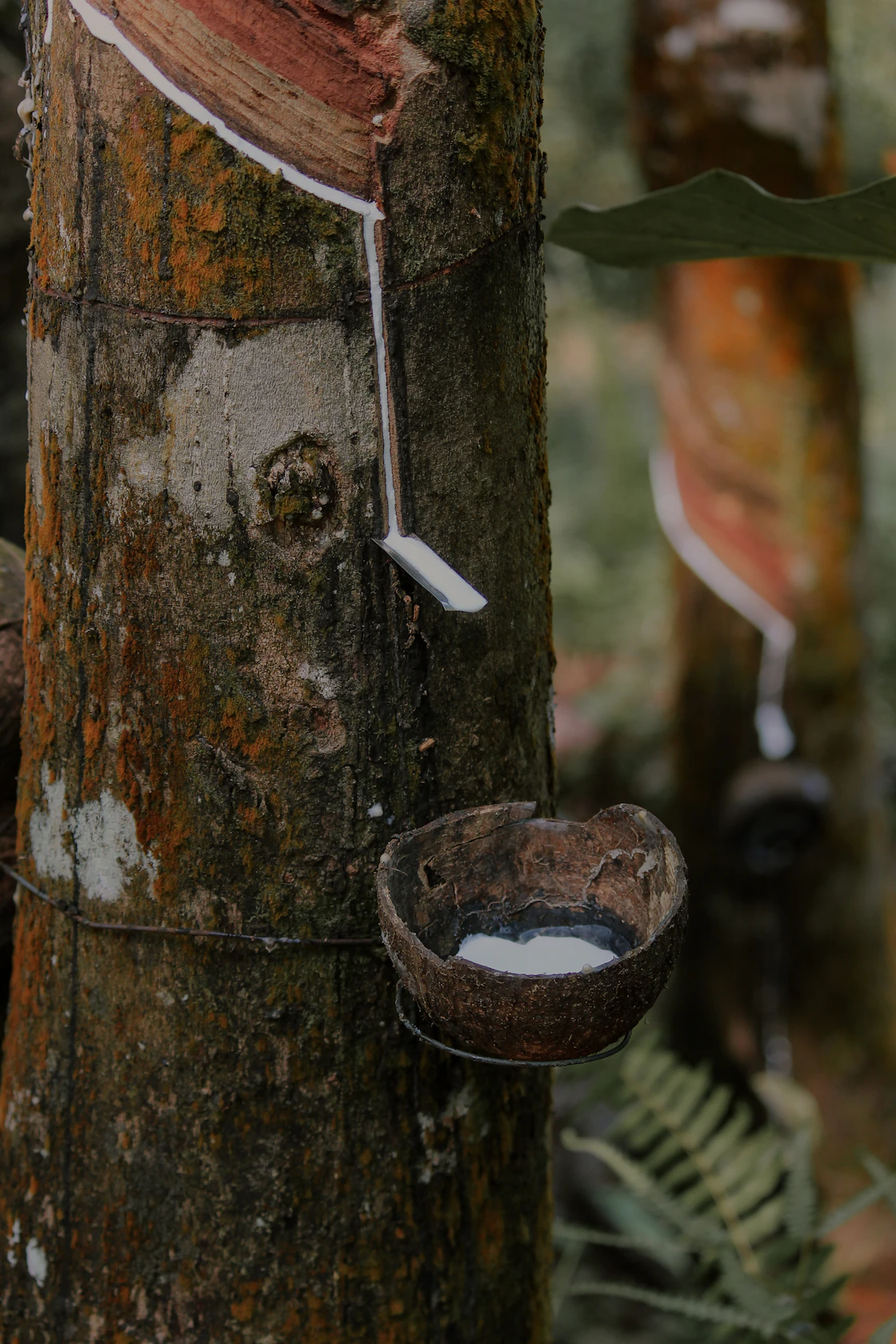
The form for your first EUDR due diligence statement is short. The submit button stays grey until every field is filled. The long part is getting what goes into those fields, and your suppliers hold most of it.
As of 14 November 2026, large and medium operators have 46 days until the rules apply on 30 December 2026. This page is the checklist: 12 things to have ready before you file, in the order you will need them. Tick them off and the filing itself takes minutes.
At a glance:
- The EUDR (Regulation (EU) 2023/1115) applies to large and medium operators and traders from 30 December 2026.
- Only the first operator to place goods on the EU market files the statement. Traders and downstream operators keep the reference number.
- The statement rests on three things: what the product is, where it grew (plot geolocation), and proof that it is deforestation-free and legal.
- Items 5 to 10 below are supplier data. Start there.
1. Know your role
The duties depend on who you are. An operator is the first company to place a covered product on the EU market, or the one who exports it. A trader sells goods that are already on the market. A downstream operator uses them to make something else. The operator files. The other two keep and pass on the reference number.
If you are not sure which you are, read who is a downstream operator first. Everything else on this list changes with the answer.
2. Know your date
| Who | From |
|---|---|
| Large and medium operators and traders | 30 December 2026 |
| Micro and small enterprises already covered by the EU Timber Regulation | 30 December 2026 |
| Other micro and small operators | 30 June 2027 |
The later date has conditions. It covers operators only, not traders, and only businesses that already counted as micro or small on 31 December 2024. If in doubt, plan for 30 December 2026. The dates are on the Commission's EUDR page, and the latest updates page tracks any change.
3. Check that your products are in scope
Seven commodities are covered: cattle, cocoa, coffee, oil palm, rubber, soya and wood, plus derived products. Which derived products count is set by Annex I. Delegated Regulation (EU) 2026/2102 rewrote that list. It took out items such as cattle leather and vulcanised rubber articles, and added soluble coffee, certain palm oil derivatives and frozen cattle tongues from 30 December 2027.
Check every CN code you import against the amended Annex I. How to find a CN code explains the lookup.
4. Get access to the EU Information System
The statement is filed in the EU Information System, which runs on TRACES. It reopened at the end of June 2026 after technical updates. Create your account now and file a test statement, so the first real one is not also your first login. If you plan to connect your own software, the Commission's July 2026 implementing act sets new specifications for the automated interfaces.
5. Describe each product and its quantity
Per consignment, you need the product description, the CN code and the net mass in kilograms. These usually sit on the invoice and the packing list. Check that the two agree before you type anything into the system.
6. Name the country of production
Give the country where the commodity was grown or harvested. If a consignment mixes lots from several countries, every country has to be listed. The country also matters for risk: the Commission benchmarks countries, and your risk assessment starts from that list.
7. Collect plot geolocation for every plot
This is the item that takes longest. Every plot the commodity came from needs coordinates, with no sampling. Plots under 4 hectares can be given as a single point. Plots of 4 hectares or more need a polygon. For cattle, a single point never satisfies the rule.
Ask suppliers for the polygon files early. A co-operative with hundreds of smallholders will not produce them in a week.
Bindu does this part. Items 5 to 10 are the same data, collected again for every shipment. Bindu reads your invoices, packing lists and supplier records into products and origins, and checks plot geolocation against the point-and-polygon rules. You review the exceptions instead of building the sheet. See how it works.
8. Prove the land was not cleared after 31 December 2020
The cutoff is 31 December 2020. The goods must not come from land that was deforested after that date, and the date does not reset when land changes hands. You need evidence that ties each plot to that claim. Satellite checks against the cutoff are common here, and the evidence should be kept with the consignment it supports.
9. Collect the legality documents
The goods must also be legal under the law of the country of production. That means documents such as land-use rights, environmental and labour compliance, and tax and customs records, depending on the country. Ask each supplier what they hold, and ask for it in writing before the container ships.
10. List every supplier in the chain
The statement carries the names, addresses and contact details of the operator and of everyone who supplied the commodity. For coffee or cocoa, that can mean a co-operative, an exporter and a trader. Get the full chain on paper now. A gap in the chain is a gap in the statement.
11. Write down your risk assessment
Before you file, you assess whether the risk that the goods are linked to deforestation or illegality is negligible (Article 10 of the regulation). If it is not, you mitigate it first (Article 11). Keep the reasoning, not only the conclusion. If an authority asks, the paper trail is your answer.
The simplified route exists for micro and small primary operators in low-risk countries. Read the simplified declaration before you decide you qualify.
12. Plan your record-keeping and your reference number
Keep the statement and the evidence behind it for five years. When you file, the system returns a reference number. It travels with the goods, and your downstream customers quote it instead of filing their own. Decide now who in your team passes it on, and where it is stored. What the DDS reference number is covers the handover.

What to do this week
- Settle items 1 to 3. They take an afternoon.
- Log in to the Information System (item 4).
- Send every supplier one message listing items 5 to 10 and ask for what they have.
- Leave 11 and 12 until the data arrives.
Where Bindu fits. Collecting this data is the work. The statement is the last few minutes. Bindu keeps legality evidence attached to each consignment for the five-year window, and the statement assembles from that record. The legal conclusion stays yours to confirm. A spreadsheet can hold this checklist. Bindu fills it from the documents you already have, and checks it as it goes. Book a demo.

FAQ
What are the EUDR requirements for importers? An operator must exercise due diligence and file a statement before placing covered goods on the EU market. The statement carries the product and quantity, the country of production, the geolocation of every plot, supplier details, and a conclusion that risk is negligible.
Source: EUR-Lex: Regulation (EU) 2023/1115 (consolidated)
When do I have to file my first EUDR due diligence statement? From 30 December 2026 for large and medium operators and traders. Micro and small operators that were not already under the EU Timber Regulation follow from 30 June 2027.
Source: European Commission: EUDR
Who files the due diligence statement? The operator that first places the goods on the EU market, or exports them. Traders and downstream operators do not file a new statement. They keep and pass on the reference number.
Source: EUR-Lex: Regulation (EU) 2023/1115 (consolidated)
What geolocation data does the EUDR need? Coordinates for every plot of land where the commodity was produced. A point is enough for plots under 4 hectares. Plots of 4 hectares or more need a polygon, and cattle need more than a single point.
Source: EUR-Lex: Regulation (EU) 2023/1115 (consolidated)
Which products are covered by the EUDR? Cattle, cocoa, coffee, oil palm, rubber, soya and wood, and the derived products listed in Annex I. Delegated Regulation (EU) 2026/2102 amended that list.
Source: EUR-Lex: Delegated Regulation (EU) 2026/2102
This article reflects the official position as of 14 November 2026. This is general information, not legal advice.