
The EUDR DDS Reference Number, Explained
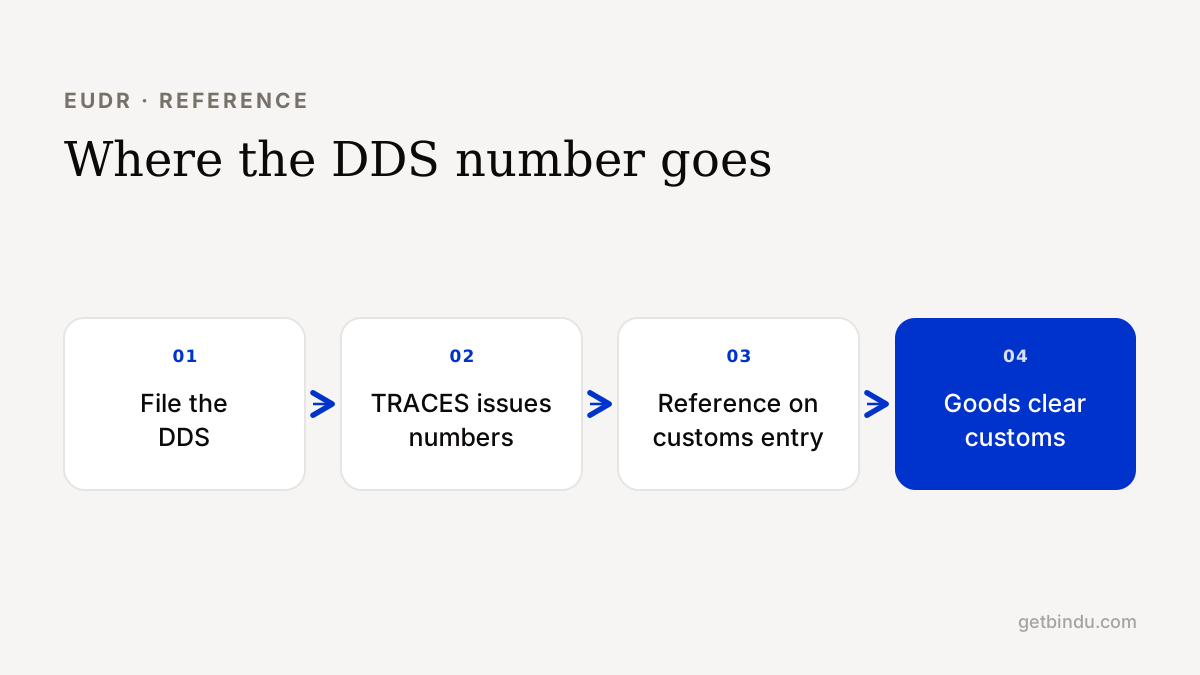
The container is at the border. The broker sends one line: "Customs wants the EUDR DDS reference number before they'll clear this. Send it now." You know a Due Diligence Statement was filed. But which of the two numbers that TRACES handed back does the broker actually need? And where does it go on the declaration? This post stays on that one number: what it is, how it differs from the verification number, and what to do when you do not have one yet.
At a glance:
- Filing a DDS in TRACES returns two numbers: a reference number and a verification number.
- The reference number is the one for customs and for the supply chain.
- The verification number stays with the record and confirms the exact statement lodged.
- Neither number exists until you file, so there is no way to fetch one on demand.
- For large and medium operators, the statement is due by 30 December 2026.
What the EUDR DDS reference number is
When a Due Diligence Statement is filed in TRACES, the EU Information System returns two identifiers. The DDS reference number is the one for customs and for the supply chain. You quote it on the customs declaration. That lets authorities tie the goods in front of them to the statement that covers them. You also pass it down the chain. Parties after you can then point back to your due diligence without filing again.
Think of the reference number as the public handle on your DDS. It travels. The verification number stays with the record. For the wider picture of what a DDS is, read the full DDS guide alongside this post. That pillar covers the statement itself. This spoke stays on the number.
Reference number vs verification number
Filing returns two numbers. Mixing them up is the fastest way to slow a shipment down. The DDS verification number is the one that pins the exact version of the statement you lodged. It lives with the filing. You do not hand it around at the border.
Here is how the two compare:
| What you are checking | DDS reference number | DDS verification number |
|---|---|---|
| Main job | Customs and the supply chain | The audit record |
| Quoted on the customs declaration | Yes | No |
| Passed to traders and manufacturers | Yes | No |
| Confirms the exact statement version | No | Yes |
| Where it comes from | TRACES, at filing | TRACES, at filing |
So when a broker asks for "the EUDR DDS number" at customs, they mean the reference number. When an auditor wants to confirm which statement was submitted, the verification number is the one that matters. Both come from the same place. TRACES mints them the moment you file.
Where both numbers come from
Neither number is something you generate yourself. Neither exists before filing. Under the EUDR, Regulation (EU) 2023/1115, only an operator or a solo operator lodges the DDS in TRACES. An operator is the first party to place goods on the EU market. The statement attests that the risk of non-compliance is negligible. It also references the plot geolocation behind the goods. The instant it is accepted, TRACES returns both numbers together.
Producers are farms or co-operatives that supply data but never file. Traders and downstream manufacturers do not file a fresh statement for goods already on the market either. That is exactly what the next section turns on.
How the reference number moves down the chain
The reference number is built to be reused. Under the December 2025 simplification, Regulation (EU) 2025/2650, a trader or downstream manufacturer does not repeat the whole exercise for goods an operator already declared. They reuse and pass on the upstream operator's DDS reference number.
Consider a real chain. An importer places green coffee on the EU market and files the DDS. TRACES returns the reference number. A roaster then buys those already-declared beans. The roaster references the importer's number rather than filing a new DDS for the same lots. A wholesaler further down does the same. The number is the thread that ties every later step back to the original due diligence. That is why it cannot get separated from the batch it covers.
Coffee importers sit at the operator position on CN heading 0901, so they feel this most directly. If that is you, the coffee importers guide walks through the whole flow from supplier data to filed DDS. If you supply those importers, see EUDR for coffee exporters.
Where the number appears on the customs declaration
The DDS reference number is quoted on the customs declaration for the goods it covers. That lets the authorities clearing the shipment match the physical consignment to the statement in TRACES. That is the moment the broker was asking about. Without the reference number in hand, the declaration cannot carry the link, and the goods wait.
A reference number only covers what it was filed against. So verified and unverified lots must stay apart. Imagine one bag in a container comes from a plot you never mapped. That single unverified bag sits outside the statement. It can fail the whole container. The fix is to split the consignment before it ships, not at the border.
What to do if you do not have one yet
There is no shortcut. The reference number does not exist until the DDS is filed. If customs is asking and you have no number, the answer is not to find one somewhere. It is to file the statement correctly and let TRACES return it. That means three things are in place first:
- The plot geolocation is recorded (Article 9: every plot, no sampling).
- The legality checklist is done (Article 2(40): eight legal areas).
- The risk conclusion is written down.
Then you file. This is where the timing bites, because the numbers cannot be produced in the minute the broker asks. 30 December 2026 is the application date for large and medium operators, the deadline that actually applies after two postponements. From that date, goods crossing the border need the statement, and the statement needs to exist before the goods do.
How Bindu gets you the number
Bindu is a trade-compliance OS, and this is the exact gap it closes. It takes you from raw supplier data to an accepted TRACES statement. Then it files to TRACES in one click and returns both numbers: the DDS reference number for customs, and the verification number for the record. You do not copy identifiers between systems. You do not wonder which one the broker means.
And because the reference number has to travel, Bindu carries it down the chain. A trader or downstream manufacturer reuses the upstream reference number instead of refiling. Every filing is held in a 5-year evidence vault, hash-chained per actor.
So the next time the broker messages "send it now" from the border, the number is already filed and sitting where it belongs. It is not something you are scrambling to find. Book a demo and see how Bindu files to TRACES and returns both numbers.
FAQ
What is the EUDR DDS reference number? It is the identifier TRACES returns when a Due Diligence Statement is filed. It is used at customs and passed down the supply chain, so later parties can point back to the original due diligence, under Regulation (EU) 2023/1115.
Source: EUR-Lex: EUDR, Regulation (EU) 2023/1115 (consolidated)
What is the difference between the DDS reference number and the verification number? The reference number is for customs and for the chain. You quote it on the customs declaration and hand it to traders and downstream manufacturers. The verification number is for the record: it confirms the exact statement that was lodged. Both are returned by TRACES when you file.
Source: European Commission: EUDR Information System (TRACES)
Can a trader or manufacturer reuse the upstream DDS reference number? Yes. Under Regulation (EU) 2025/2650, traders and downstream operators handling goods an operator already declared reuse and pass on the upstream operator's reference number rather than filing a new DDS.
Source: EUR-Lex: Regulation (EU) 2025/2650 (second postponement)
What if I do not have a DDS reference number yet? The number does not exist until you file. There is no way to obtain one without lodging the statement in TRACES first, with plot geolocation and the legality checklist in place. For large and medium operators, the statement is due by 30 December 2026.
Source: European Commission: EUDR Information System (TRACES)