
CBAM Default Values: Why Missing Data Costs You

Two importers bring in the same tonne of steel from the same country. One pays more CBAM than the other.
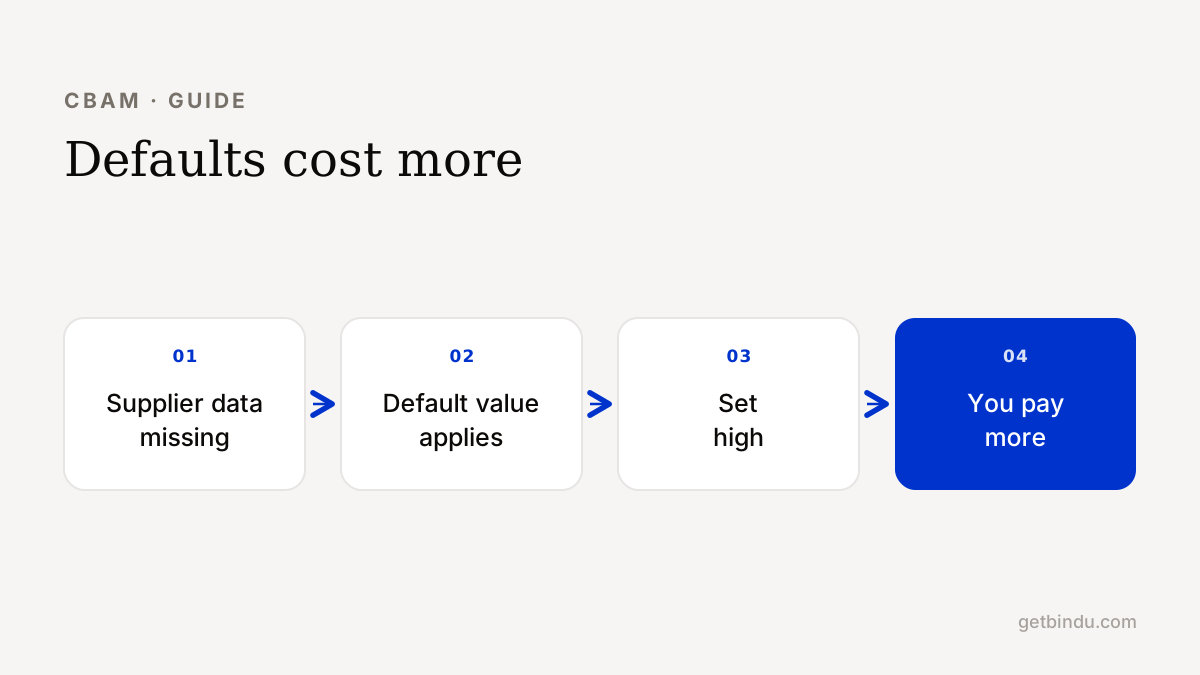
The difference is not the steel. One of them got real emissions data from the mill. The other did not, so a default value filled the gap, and that default was set high.
Under CBAM, the missing data is the cost.
It is worth knowing why that gap gets priced the way it does. That is what tells you when chasing a supplier for real figures actually pays for itself.
At a glance:
- CBAM default values are Commission-published fallback figures for the embedded emissions of covered goods.
- They are set conservatively, meaning high, on purpose. The high figure pushes importers toward real data.
- Verified actual data from the installation takes precedence, and it usually lowers the bill.
- A carbon price already paid at origin is deducted. For cement and fertilisers, indirect emissions count too.
- Data collection is the work. The figures sit with the supplier abroad, not in your system.
What are CBAM default values?
CBAM default values are the Commission-published fallback figures for the embedded emissions of covered goods. You use them when you have no verified actual data from the installation that made the goods.
Embedded emissions are the carbon released in making your goods. Under the Carbon Border Adjustment Mechanism, you pay for them, so someone has to put a number on them.
The best number is actual data from the installation that made the goods, verified by an accredited third party. When you do not have that, the EU lets you use a default value instead.
Default values are the fallback, not the target. They exist so an importer is never stuck. The method sits in Annex IV of Regulation (EU) 2023/956.
Why defaults are set high
Default values are set conservatively, meaning high. That is deliberate.
If a default were generous, no one would bother collecting real data. The whole point of CBAM would leak away. A high default is the nudge that pushes importers to get actual figures.
So a default is a safe answer, not a cheap one. It almost always overstates the carbon. You pay for every overstated tonne.
A verified actual value is the real embedded-emissions figure from the installation, checked by an accredited third-party verifier. That figure is what a default stands in for until you have it.
Default value vs verified actual data
The two paths lead to different bills, paid in the same CBAM certificates. This table shows where they differ.
| Dimension | Default value | Verified actual data |
|---|---|---|
| Source | Commission figure for the good | The installation that made the goods |
| Verification | None needed | Accredited third-party verifier |
| Level | Set high, on purpose | The real embedded emissions |
| Cost impact | Usually overstates carbon, so you pay more | Priced on real emissions |
| Effort | No collection needed | You must chase the supplier |
| When it applies | Fallback, when no actual data | Takes precedence when you have it |
The gap between the two columns is your money. That is the whole reason to collect data.
A worked example
Suppose two importers each bring in one tonne of steel. Call them Importer A and Importer B.
Importer A got verified figures from the mill. Importer B got nothing back, so a default value applies.
The numbers below are round and illustrative. They show the mechanism, not the real published figures.
Say the default embeds 2.0 tonnes of CO2 per tonne of steel. Say the mill's verified figure is 1.4. Importer A is priced on 1.4. Importer B is priced on 2.0.
Importer B pays the CBAM price on 0.6 tonnes more, for every tonne of steel. Same steel, same country, higher bill. The only difference is the data.
How actual data lowers the bill
Verified installation data takes precedence over defaults. If you can show the real embedded emissions, backed by an accredited verifier, you use those instead.
Two other rules move the number in your favour.
First, if a carbon price was already paid where the goods were made, it is deducted. The tonne is not charged twice.
Second, the split between direct and indirect emissions matters. For most goods you count direct emissions. For cement and fertilisers, indirect emissions count too. Knowing which applies stops you over-reporting.
Edge cases worth checking
A few situations change what actual data even means.
Complex goods carry the embedded emissions of their input materials, the precursors. A part made from imported steel inherits that steel's emissions, so the data you need may sit one step further up the chain.
Electricity has its own default-value provisions. It does not work exactly like the metal or mineral goods.
And a carbon price paid at origin only helps if you can evidence it. An unproven claim of a paid price does not reduce the number.
Why the data sits with the supplier
None of this is hard to understand. It is hard to collect.
The emissions figures live with the installation abroad, not in your system. A CBAM report or declaration is only as good as the data the supplier sends back, and suppliers are slow, or silent, or do not have the numbers themselves.
That is why CBAM is a data-collection problem before it is a carbon problem. Every unanswered request is a default value waiting to happen.
The pressure is the deadline. A declaration falls due whether the supplier has replied or not. If the real figure is not in hand by then, the default applies, and the overpayment is locked in for that period.
Where Bindu fits. A default value is what you fall back on when a supplier reply lands too late. Bindu sends the data request to the right installation, stores the reply and the verifier's proof against that import, and shows which shipments are still unanswered while there is time to chase them. See the CBAM breakdown.
FAQ
What are CBAM default values? Default values are Commission-published fallback figures for the embedded emissions of covered goods. Importers use them when they do not have actual, verified emissions data from the installation that produced the goods. The rules for using them during the transitional period sit in a separate implementing regulation.
Source: EUR-Lex: CBAM, Regulation (EU) 2023/956
Source: EUR-Lex: Implementing Regulation (EU) 2023/1773, CBAM reporting in the transitional period
Why do default values cost more? Default values are set conservatively, meaning high, on purpose. A high default removes any incentive to skip real data collection. Because it overstates the carbon, an importer relying on defaults almost always pays more than one using verified actual data.
Source: European Commission: Carbon Border Adjustment Mechanism
How are CBAM embedded emissions calculated? Per Annex IV of the CBAM regulation: direct emissions per tonne of goods, plus indirect emissions for cement and fertilisers. Any carbon price already paid in the country of production is deducted, and verified actual installation data takes precedence over default values.
Source: EUR-Lex: CBAM, Regulation (EU) 2023/956
Can I always use default values instead of collecting data? Default values are a fallback, not a free choice that saves effort. Because they are set high, they cost more, and verified actual data takes precedence when you have it. Collecting real supplier data is how you lower the bill.
Source: EUR-Lex: CBAM, Regulation (EU) 2023/956
Who provides the emissions data for CBAM? The installation that produced the goods, abroad. The importer must obtain those figures from the supplier and, in the definitive regime, have actual figures verified by an accredited third party. The collection burden sits with the importer.
Source: European Commission: Carbon Border Adjustment Mechanism
What happens if a supplier never sends emissions data? The default value applies for that import. Because defaults are set high, the importer pays more than one with verified actual data. You can move to actual data later if you obtain and verify the real figures, but the default stands for any period where no verified data was in hand.