
FOB Incoterms: What Free on Board Means in 7 Checks

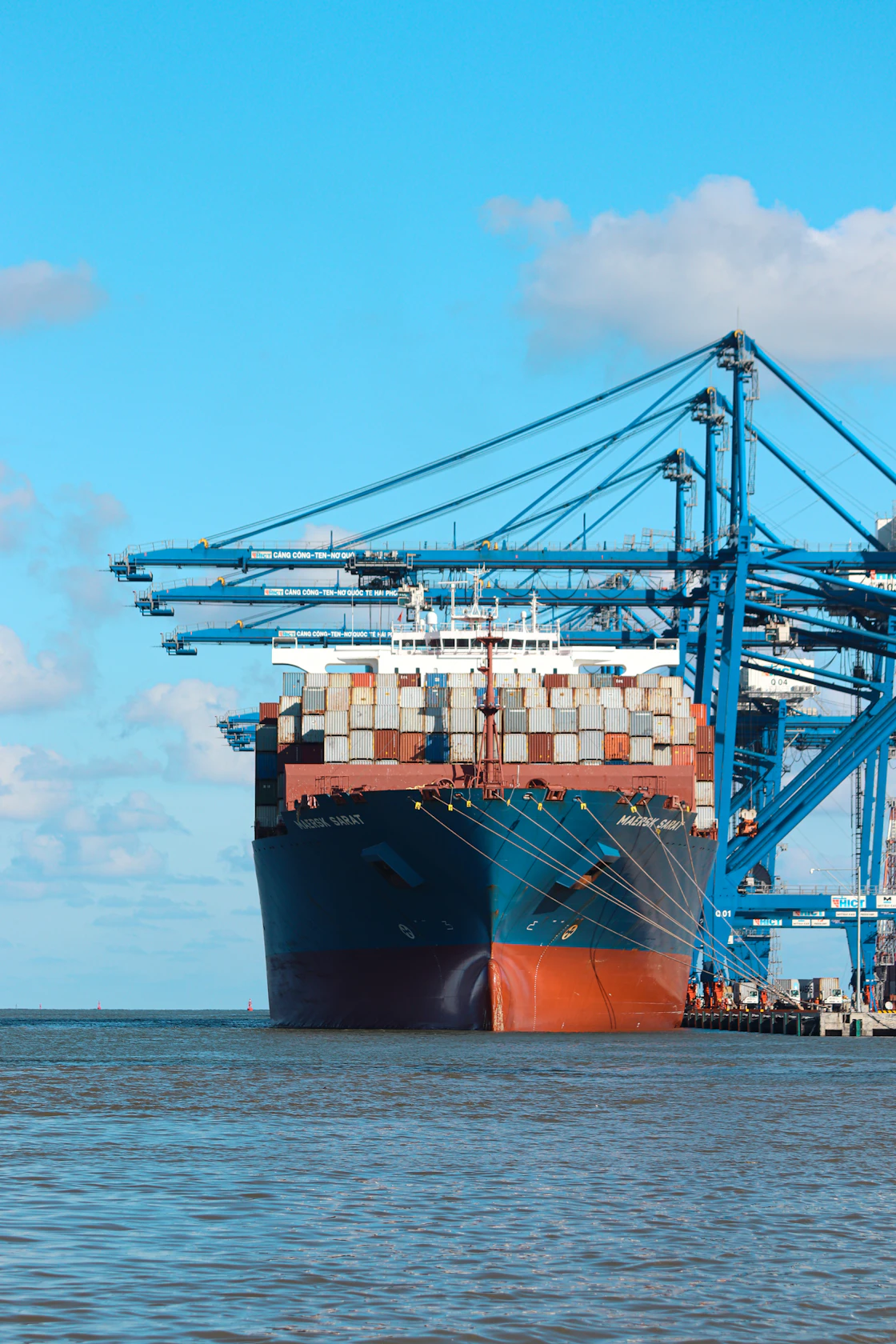
Your supplier writes "FOB Shanghai". Your goods are in containers. Who is the term really for? And what happens if your ship is late and the cargo sits on the quay?
FOB is a well-known term, and containers are where it most often goes wrong. This is the checklist we would run before you agree it. Seven checks, in the order they come up.
At a glance:
- FOB stands for Free on Board. The seller delivers the goods on board the vessel the buyer nominates, at the port of shipment.
- Risk passes to the buyer once the goods are on board.
- The seller loads the goods and clears them for export. The buyer books the ship, pays the freight and handles import.
- FOB is for sea and inland waterway transport only. For containers, the ICC points to FCA.
- The price excludes freight and insurance, which matters for the EU customs value.
1. Know what FOB means
German customs describes FOB as delivery on board the vessel, with risk passing on board. The ICC Academy spells out the split. The seller brings the goods from its premises to the port, loads them on the buyer's vessel and completes export formalities. The buyer contracts the carrier, pays the freight and handles import formalities and any transit customs.
2. Use FOB for sea transport only
The ICC says FOB is for maritime or inland waterway transport. If part of the journey is by truck or air, another term fits better. The ICC Academy also names the goods FOB suits: bulk cargo such as minerals, oil, cement, steel and grain, and new vehicles.
3. Do not use FOB for containers
This is the check that saves the most trouble. According to the ICC, when goods are containerised the seller typically hands them over at the container terminal instead of on board the vessel. The containers may wait there for days before loading. In that case the ICC says FCA is the more appropriate rule. If your cargo is in a box, ask for FCA, as we explain in FCA Incoterms explained.
4. Name the port and the vessel
The buyer must tell the seller in good time the name of the vessel and the exact loading place in the port. Write the term in full, with the rule, the port and the version: "FOB Shanghai, Incoterms 2020". Then agree who sends the vessel details, and by when.
5. Know what happens when the buyer is late
The ICC lists three situations where risk and cost pass to the buyer even though the goods are not yet on board. First, the buyer gives no vessel details in time and the goods cannot be loaded. Second, the vessel is delayed by days or weeks, and the buyer pays for storage at the port until it arrives. Third, the buyer gives late notice and the ship closes for cargo before the notified time. If you are the buyer, your forwarder must hit these dates. If you are the seller, keep a dated record of every notice.
6. Compare FOB with FCA and CIF
FOB delivers on board. FCA delivers to a carrier the buyer names and fits any mode of transport. CIF also delivers on board, but the seller pays the main freight and takes out insurance. According to German customs, the CIF cover is the minimum, at the level of Institute Cargo Clauses C.
| FOB | FCA | CIF | |
|---|---|---|---|
| Where it is delivered | On board the vessel at the port | Carrier named by buyer | On board the vessel at the port |
| Main freight paid by | Buyer | Buyer | Seller |
| Insurance obligation | None | None | Seller, minimum cover |
| Export clearance | Seller | Seller | Seller |
| Containers | ICC suggests FCA | Suits containers | Check with your forwarder |
Bindu does this part. Under FOB your export papers, the supplier's invoice and your import declaration all have to carry the same product, origin, quantity and value. Bindu does not choose your Incoterm, book the vessel or clear goods for you. It reads your invoice or packing list into products, origins and quantities, classifies each line and shows which rules apply. The facts then come from one place. See how it works.
7. Add freight and insurance to the customs value
For goods entering the EU, German customs says transport and insurance costs are added to the price up to the place where the goods enter the EU, if they are not already in it. An FOB price has neither. So your agent adds the sea freight and any insurance to the invoice value when setting the customs value. Ask for the freight invoice early. You will also need an EORI number, which what an EORI number is explains, and the right code for the goods, which how to find a TARIC code covers.
What to do this week
- List your open quotes that say FOB.
- Mark every one where the goods travel in containers. Ask for FCA instead.
- For the rest, check the port is named and "Incoterms 2020" is written next to the rule.
- Set a date for the vessel details, and who sends them.
Where Bindu fits. FOB puts the freight and the import work on the buyer, and the dates are tight. The paperwork still repeats the same facts on the invoice, the packing list and the import declaration. Bindu keeps each product's code, origin and quantity in one record per shipment and reuses it on every document. It does not replace your freight forwarder and does not decide the Incoterm. See how it works.
FAQ
What does FOB stand for? Free on Board. The seller delivers the goods on board the vessel the buyer nominates, at the port of shipment.
Source: ICC Academy: FOB and FAS explained
Where does risk pass under FOB? Once the goods are on board the vessel at the port of shipment. The ICC lists exceptions where the buyer carries the risk earlier, for example when the buyer is late with vessel details.
Source: ICC Academy: FOB and FAS explained
Can I use FOB for containers? The ICC recommends FCA for containers, because the seller usually hands them over at a terminal, before they are on board.
Source: ICC Academy: FOB and FAS explained
Who pays the freight under FOB? The buyer. The buyer contracts the carrier and pays the transport from the port of shipment.
Source: ICC Academy: FOB and FAS explained
Is FOB the same as CIF? No. Under CIF the seller also pays the main freight and takes out minimum insurance. Under FOB the buyer does both.
Source: Zoll: Lieferbedingungen (Incoterms 2020)
This article reflects the official position as of 18 November 2026. We read the ICC Academy and German customs pages on that date. This is general information, not legal advice.