
MPEDA Catch Certificate: EU Rules for Exporters

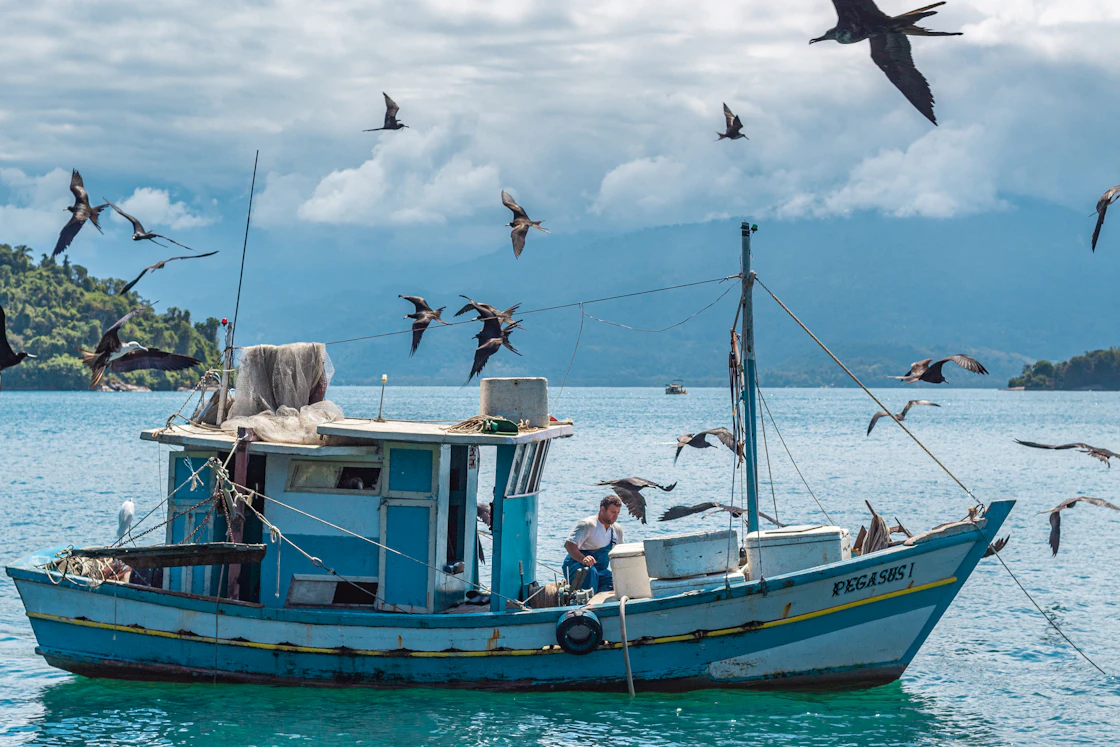
A container of wild-caught squid leaves an Indian port for Rotterdam. It carries an invoice, a packing list and a health certificate. If it does not also carry a catch certificate, the EU will not let it in.
For seafood leaving India, that certificate comes from the Marine Products Export Development Authority (MPEDA). The rule behind it is more than fifteen years old. What changed is how the EU side handles the paper, and that is where exporters now get questions from their buyers.
This page covers which products need an MPEDA catch certificate, how to get one, what it costs, and what the EU's January 2026 switch to a digital system means for an exporter.
At a glance:
- The EU bans imports of fishery products from illegal, unreported and unregulated (IUU) fishing. Wild-caught products need a catch certificate validated by the flag State of the vessel.
- In India, MPEDA validates catch certificates for seafood exported to the EU.
- Farmed shrimp raised from larvae is excluded from the rule, along with many freshwater species. Check your tariff line against Annex I.
- MPEDA's current fee is Rs 3,000 plus 18% GST for frozen cargo and Rs 1,500 plus GST for chilled, dried or live cargo.
- Since 10 January 2026, EU importers must file the certificate through the EU's CATCH system. Exporters can still use paper.
What an EU catch certificate is
An EU catch certificate is a document that says a catch was made in line with the laws and conservation rules that apply to the vessel. It is the core of the EU's anti-IUU scheme, set up by Council Regulation (EC) No 1005/2008.
Article 12 sets out the rule in four steps. Importing fishery products from IUU fishing is prohibited. To make that enforceable, fishery products may only enter the EU with a catch certificate. A public authority of the vessel's flag State must validate it. And it must contain the information in the specimen in Annex II.
The certificate follows the catch, not the exporter. If the vessel is Indian-flagged, the flag State is India, and MPEDA is the body that validates. MPEDA describes itself as the nodal agency for validating catch certificates for seafood exported to the EU. It has issued them since 1 January 2010, and since 1 April 2019 it issues them online.
Which products need one
Not every seafood export needs a catch certificate. Annex I of the regulation lists products excluded from the definition of "fishery products". Two exclusions matter most for Indian exporters.
- Aquaculture products obtained from fry or larvae. This is the first entry in Annex I. Shrimp raised in a pond from larvae falls here and needs no catch certificate.
- Many freshwater species, including carp, tilapia, catfish such as Pangasius and Clarias, and other freshwater fish, in several product forms.
Wild-caught marine products do need one. That covers products such as wild tuna, squid, cuttlefish and sea-caught finfish.
The catch is in the detail. Annex I works by product description and tariff line, and many entries are partial ("ex") codes. A farmed product and a wild-caught one can sit under the same heading. Before you assume an exclusion applies, check your exact code against the annex and confirm how the product was sourced. Our guide to the HS code explains how the code is built and why partial matches trip people up.
Who does what
The certificate passes through four sets of hands. The role of each is fixed by the regulation.
| Step | Who | What they do |
|---|---|---|
| Apply for the certificate | The exporter | Submits the catch details for the consignment through MPEDA's portal |
| Validate | MPEDA, as the flag State authority | Validates that the catch was made in line with the applicable rules |
| Issue a processing statement | The processing plant, if the product is processed | Declares what was processed from which catches, endorsed by the competent authority |
| File in the EU | The EU importer | Submits the certificate and transport details electronically through CATCH, at least three working days before arrival |
| Check | The importing Member State | Checks the documents and can verify the catch before authorising entry |
Two points in that table are worth a second look.
First, processed products need a second document. Article 14(2) requires a statement from the processing plant, in the form of Annex IV. It describes the unprocessed and processed products and their quantities, and confirms the processed goods come from catches covered by validated certificates. The competent authority of the processing country endorses it. We did not find which Indian body endorses the Annex IV statement, so ask MPEDA which office handles it for your plant.
Second, the three-working-day deadline is the importer's, but you feel it. Article 16(1) says the deadline can be adapted by product type, distance or means of transport. If your certificate reaches your buyer late, their filing slips and your container waits.
How to apply through MPEDA
MPEDA runs a dedicated catch certificate portal. When we checked it on 11 November 2026, the login page offered four roles: exporter, field officer, HDC and MPEDA. Exporters get a form to submit, a tracker for certificates already filed, and a page with downloadable formats, including a format for the EU catch certificate.
Two parts of the portal were not usable. The procedure link on the home page went to a placeholder address, and the FAQ page read "coming soon". So the portal does not yet explain the steps on its own. Ask your MPEDA regional office for the current procedure before your first filing. MPEDA's own catch certificate page is the starting point.
Exporters of marine products also register with MPEDA. That is a separate step from the catch certificate, with its own fee.
What it costs
MPEDA's fee page, last updated on 11 November 2026, sets the catch certificate fee by cargo type.
| Cargo | Fee | With 18% GST |
|---|---|---|
| Frozen | Rs 3,000 | Rs 3,540 |
| Chilled, dried or live | Rs 1,500 | Rs 1,770 |
The fee is per certificate, and an EU consignment can need more than one if it draws on catches from several vessels or landings. Some guides online still quote the older figures of Rs 2,500 and Rs 750. Use MPEDA's own page, because it is the one that changes.
What changed on 10 January 2026
Until this year, the EU side of the scheme ran on paper and email. Regulation (EU) 2023/2842 changed that. It amended the IUU Regulation to create CATCH, a digital system built into the EU's TRACES platform. Article 12a of the regulation now says importers and authorities exchange catch certificates and related documents through CATCH.
The Commission's information note to the Council puts the date on it: use of CATCH became compulsory for EU importers and Member State authorities on 10 January 2026.
For an exporter in India, three things follow.
- You can keep using paper. CATCH is mandatory for EU operators, not for third-country exporters. Non-EU exporters and authorities may use it voluntarily, and paper certificates continue to be accepted. The EU importer enters the data.
- Old certificates still work for a while. Catch certificates validated, endorsed or signed before 10 January 2026 may be used by importers until 10 January 2028, according to AGRINFO, which the EU funds.
- Quantities are now tracked. CATCH has a quantity management mechanism. The weight of raw material imported under one catch certificate cannot exceed the weight validated in it (Article 12b). If your certificate says 20 tonnes, shipments drawing on it cannot add up to more.
That last point is the one to plan around. If a certificate is split across several shipments, the importer's filings now have to add up to the validated figure. Keep your own record of how much of each certificate you have shipped.
Common mismatches
CATCH checks that the documents agree. These are the places where the regulation asks for the same facts in several documents, so they are the places a mismatch shows up.
- Quantity. The weight on the catch certificate, the processing statement and the invoice should reconcile. A processed product weighs less than the raw material it came from, so the statement has to show both.
- Product description. The species and the product form should match across documents and with the tariff line.
- Transport details. Article 16(1) requires the importer to submit the transport details in the Appendix to Annex II with the certificate. They have to match the shipment as it actually travels.
- Missing processing statement. Processed products, as opposed to products shipped in the same form, need the Annex IV statement alongside the certificate.
None of these is exotic. They are the ordinary result of data entered separately in three places.

Where Bindu fits. Bindu does not issue or validate catch certificates. MPEDA does. What Bindu does is read an invoice or packing list into products, origins and quantities, classify each line, and show which rules apply, so the data on your documents comes from one place. See how it works.
Confirm the current procedure with MPEDA and your EU importer before you ship.

FAQ
What is an MPEDA catch certificate? It is the catch certificate that MPEDA validates for Indian seafood exported to the EU. It certifies that the catch was made in line with applicable laws and conservation rules, as the EU IUU Regulation requires.
Source: MPEDA: Catch certificate
Who issues the fish catch certificate in India? MPEDA, the Marine Products Export Development Authority. It describes itself as the nodal agency for validating catch certificates for seafood exported to the EU, and issues them online through its catch certificate portal.
Source: MPEDA: Catch certificate
Does farmed shrimp need an EU catch certificate? Not if it was raised from fry or larvae. Annex I of Regulation (EC) No 1005/2008 excludes aquaculture products obtained from fry or larvae from the definition of fishery products. Check your exact tariff line against the annex.
Source: EUR-Lex: Regulation (EC) No 1005/2008, Annex I
How much does an MPEDA catch certificate cost? MPEDA lists Rs 3,000 plus 18% GST (Rs 3,540) for frozen cargo and Rs 1,500 plus 18% GST (Rs 1,770) for chilled, dried or live cargo. Check the fee page for changes before you pay.
Source: MPEDA: Certificate fee
Do I have to use the EU's CATCH system as an Indian exporter? No. CATCH became mandatory for EU importers and authorities on 10 January 2026. Non-EU exporters may use it voluntarily, and paper certificates continue to be accepted. Your EU importer files the data in CATCH.
Source: Council of the EU: Mandatory use of CATCH
Do processed seafood exports need anything besides the catch certificate? Yes. Processed products in a single consignment need a statement from the processing plant in the form of Annex IV, endorsed by the competent authority, accompanied by the catch certificate or a copy.
Source: EUR-Lex: Regulation (EC) No 1005/2008, Article 14
This article reflects the official position as of 11 November 2026. This is general information, not legal advice.