
EUR.1 Certificate: What It Is and 7 Checks Before You Ship

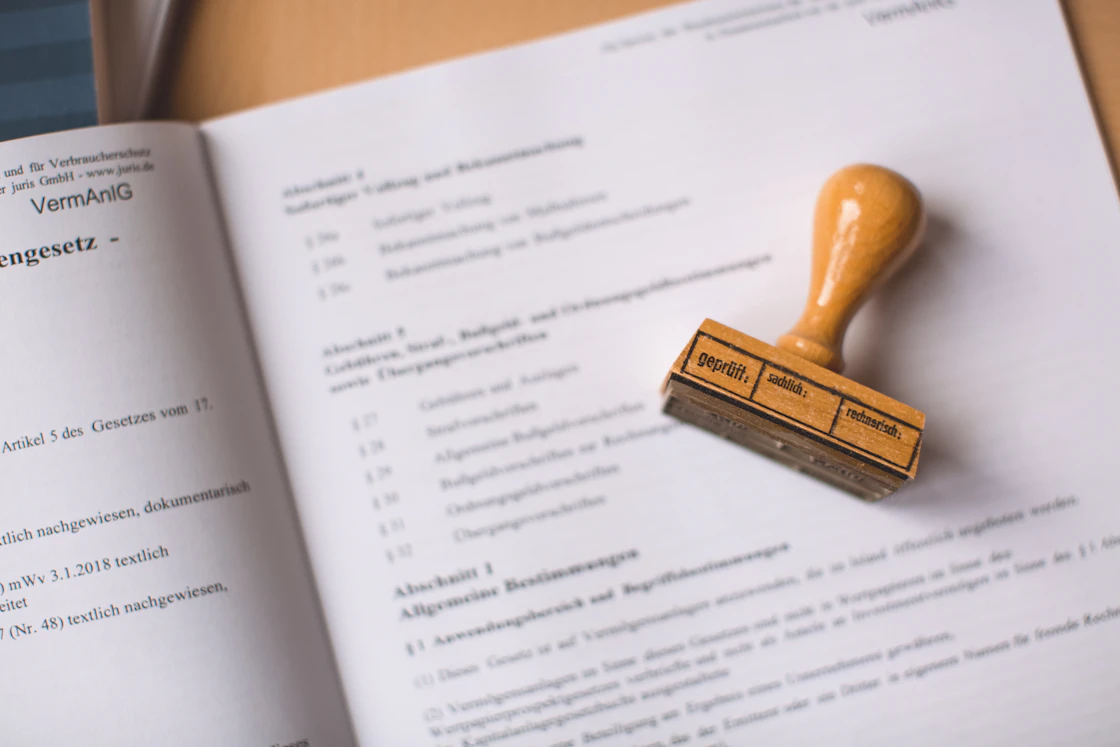
A trade agreement says your goods enter at 0% duty. Your buyer's customs office says no. The reason is often one piece of paper: the EUR.1.
It is old, it is paper-based, and it still decides whether a preference is granted. Here is what it is and the seven checks that keep it from failing.
At a glance:
- The EUR.1 movement certificate is a proof of preferential origin under some EU trade agreements.
- It is a formal proof: customs issues it on the exporter's application.
- Many agreements accept an origin declaration instead, usually up to €6,000 for any exporter.
- Validity depends on the agreement: 4 months under one, 12 months under another.
- In Germany, exporters keep origin records for 10 years.
1. Know what an EUR.1 is
The EU's Access2Markets defines it as a certificate of origin used in some EU preferential trade arrangements. It proves that the goods have preferential origin under that agreement. That is what lets the importer claim the lower duty.
German customs calls it a formal proof of preference. It is issued by a customs office or an authorised body. The other formal proof is the A.TR. (Zoll: Übersicht über Präferenznachweise)
2. Check that your agreement uses it
Not every agreement does. German customs notes that under several newer agreements, for example with South Korea, Singapore, Canada, Japan and the United Kingdom, self-certification is the rule. There is no formal proof at all. The exporter makes out a statement on origin, and for some partners the importer can rely on its own knowledge of the origin.
Check the agreement for your country pair before you print a form. German customs runs a lookup, Warenursprung und Präferenzen online, that lists which proof applies.
3. Ask whether an origin declaration is enough
For smaller shipments you may not need the certificate. Under many agreements, any exporter can make out a non-formal proof, such as an origin declaration on the invoice, up to a value limit, usually €6,000. Above that, the exporter needs the status of approved exporter or registered exporter (REX), depending on the agreement.
4. Apply with the proof attached
The exporter, or its representative, completes the certificate and the application form and hands them to customs for endorsement. Access2Markets notes it can be requested from the customs authority or an appointed body, such as a chamber of commerce, depending on the agreement. German customs adds that the application must come with every document needed to prove the origin. (Zoll: Beantragung EUR.1)
That usually means supplier declarations and a calculation showing the product meets the origin rule.
5. Get the key boxes right
German customs lists the mistakes it sees most:
| Box | What goes in |
|---|---|
| 1 | The exporter, with full address and country |
| 2 | Line 1: "European Union". Never "Germany". Line 2: the partner country, for example Egypt or Switzerland |
| 3 and 6 | Optional, but fill in the consignee and the means of transport if you know them |
| 4 | The country or territory of origin under the preferential rules. A single EU member state cannot be named |
The form is filled in one of the agreement languages: an official EU language, or the language of the country of destination.

Bindu does this part. A preference claim fails when the origin on the certificate, the invoice and the supplier declarations do not match. Bindu reads your invoices and packing lists into products, origins, quantities and values and keeps them on one record per shipment, with the supporting documents attached. Bindu does not issue the EUR.1 or decide preferential origin. It keeps the facts behind it in one place. See how it works.
6. Watch the validity and the importer's side
On import, the proof is normally presented in the original with the customs declaration. Through ATLAS, the German customs IT system, the declarant keeps it and shows it on request. Customs recognises it only if (Zoll: Vorlage und Anerkennung):
- a preference agreement exists with the country of origin shown;
- it is the right type of proof for that agreement;
- it is the original;
- the goods match the goods on the proof;
- nothing has been altered; and
- it is still within its validity period.
Validity differs by agreement. Under the pan-Euro-Mediterranean convention, Access2Markets gives four months. Under the EU-Central America agreement, twelve. Goods must also not be processed after export, and some agreements ask for proof of direct transport.
Missed it at shipment? Access2Markets says an EUR.1 can be issued retrospectively, but only in exceptional circumstances.
7. Keep the records long enough
Agreements set a minimum, often three years for the exporter. Germany sets a longer one. German customs says copies of proofs of preference and supplier declarations, and the documents behind them, must be kept for ten years under the German tax code. Formal proofs used to claim a preference must be kept in the original. (Zoll: Aufbewahrungsfristen)
What to do this week
- List your export and import lanes that claim a preference.
- For each, check whether the agreement uses an EUR.1, an origin declaration or self-certification.
- Check box 2 and box 4 on your last few certificates.
- Make sure the supplier declarations behind them are filed and dated.
Where Bindu fits. Origin is the same fact on your EUR.1, your invoice, your EUDR filing and your CBAM report. Bindu keeps it on one record per shipment, so it is entered once and matches everywhere. Bindu files the EUDR due diligence statement end to end today, from €249 a dossier. See how it works. For the codes underneath, see what an HS code is.

FAQ
What is an EUR.1 certificate? A movement certificate that proves preferential origin under some EU trade agreements, so the importer can claim reduced or zero duty.
Source: Access2Markets: EUR.1 movement certificate
Who issues the EUR.1? The customs authority of the exporting country, or an appointed body such as a chamber of commerce, on the application of the exporter or its representative.
Source: Access2Markets: Movement certificate EUR.1
How long is an EUR.1 valid? It depends on the agreement. Under the pan-Euro-Mediterranean convention it is four months from issue. Under the EU-Central America agreement it is twelve.
Source: Access2Markets: Movement certificate EUR.1
Can I use an origin declaration instead of an EUR.1? Often yes. Many agreements let any exporter make out an origin declaration up to a value limit, usually €6,000. Above it, approved exporter or REX status is needed, depending on the agreement.
Source: Zoll: Übersicht über Präferenznachweise
Can an EUR.1 be issued after shipment? Yes, retrospectively, but only in exceptional circumstances.
Source: Access2Markets: Movement certificate EUR.1
This article reflects the official position as of 21 November 2026. We read the German customs and Access2Markets pages on that date. This is general information, not legal advice.